
Overview
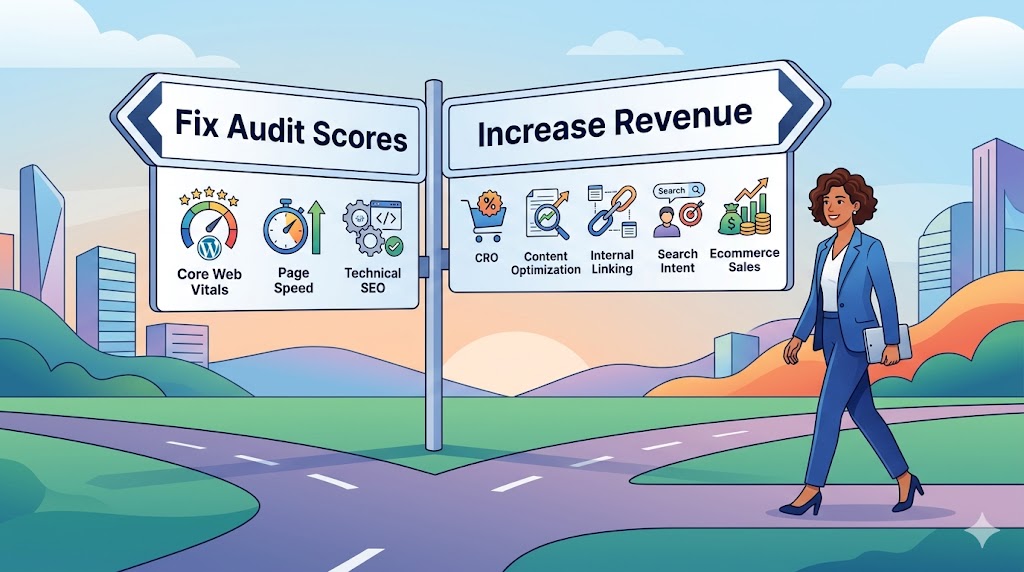
This ecommerce SEO case study shows how a revenue-first SEO strategy and SEO prioritization framework helped a premium skincare brand increase organic revenue contribution from 18% to 32%. While a previous agency focused on a critical Core Web Vitals issue, our approach prioritized the activities most closely tied to revenue growth, conversion rate optimization, internal linking, and search intent alignment.
The brand had an existing SEO agency. That agency ran an audit and flagged a Largest Contentful Paint(LCP) score of 22.3 seconds on one of the top service pages as a critical issue that needed immediate attention before anything else.
That recommendation was wrong. Not because LCP does not matter, but because it was not the issue limiting revenue at that point in time.
Why SEO Prioritization Matters More Than Audit Scores
One of the biggest mistakes in SEO audit prioritization is assuming that every critical issue reported by a tool deserves immediate attention. Effective SEO prioritization requires understanding which issues are actually limiting revenue, rankings, and conversions rather than simply fixing the highest severity warnings in an audit report.
The Problem With the Previous Agency’s Approach
The page in question had a technically poor LCP score. Most audit tools would flag it as critical.
But when I looked at the actual business data, this page was already driving 18% of total organic SEO revenue for the brand. Users were visiting, engaging, and converting despite the slow LCP score. Bounce rates were not alarming. The page was generating consistent revenue.
Fixing LCP first would have meant spending weeks on a technical task while leaving the real revenue blockers untouched.
The agency was prioritizing based on audit severity. I prioritized based on business impact.
Revenue Blockers Identified Through SEO and CRO Analysis
Instead of approaching the page through a purely technical SEO lens, I analyzed it from a conversion rate optimization SEO perspective.
The header was using two separate rows that pushed all main content further down the page, reducing visibility of key product information above the fold. The filter bar was poorly structured with unnecessary double rows that took up large amounts of vertical space for very little content. Product cards had oversized images that pushed product names, prices, and call to action buttons far below the visible area.
The Add to Bag button used a white background with a blue outline and square corners, making it weak as a primary call to action. Product names were in regular font weight, making it difficult for users to scan the grid quickly. The content on the page was not fully aligned with buyer intent. Internal linking was weak and not pushing enough authority toward this high-revenue page. The meta title and description were not optimized for the right search intent.
None of these issues would show up as critical in a standard technical SEO audit. But all of them were directly affecting how users experienced the page and whether they converted.
What I Did
I worked across four areas before touching LCP.
Page Design and CRO
I collapsed the double-row header into a single compact bar to immediately reduce wasted vertical space and bring product content higher on the page. I restructured the filter bar into one compact row with no box border, combining the label and all dropdowns into a single line no taller than 44px. I reduced product image height on category pages so users could see product names, prices, and buttons without scrolling. I changed the Add to Bag button to a dark navy fill with white text and fully rounded pill corners to create a stronger and more visible primary call to action. I set product names to bold so users could scan the product grid instantly without reading each card individually.
Content
I rewrote and restructured the page content to match what buyers were actually looking for at that stage of their journey. The content previously described the product in generic terms. I aligned it more closely with the specific intent signals that were bringing users to this page from search.
Internal Linking Strategy
I audited the internal linking structure across the site and built targeted links from relevant pages to push more authority toward this high-revenue page. This was one of the fastest wins in terms of ranking improvement.
Metadata
I rewrote the meta title and meta description to better match search intent and improve click through rates from organic search results.
Results
After completing the CRO improvements, content updates, metadata optimization, and internal linking strategy improvements, organic revenue contribution from this page grew from 18% to 32%.
After the LCP fix was completed later, revenue contribution did not change.
The biggest gains came from improving the user experience, matching search intent better, strengthening internal links, and making it easier for people to buy.
The Approach I Used
Improving product pages
Better metadata
Better user experience
Better trust signals
Better page structure
Core Web Vitals
LCP improvements
JavaScript optimization
Code cleanup
What This Case Study Shows
Technical severity and business severity are two different things.
A page can have a 22 second LCP score and still generate consistent revenue because real users experience the page differently from how a tool measures it. In this case, the visual load experience was acceptable even though the technical LCP measurement was not.
The issues that were actually blocking more revenue were all on the conversion and content side. Wasted vertical space was pushing products below the fold. Weak button design was reducing add to bag clicks. Poor content alignment meant users landing on the page were not immediately seeing what they needed to convert. Weak internal linking meant the page was not getting the authority it deserved given its revenue contribution.
Fixing all of this first generated a 14 percentage point increase in organic revenue contribution. Fixing the thing the audit called critical generated nothing.
How I Approach SEO Prioritization
When I audit a website, I separate recommendations into three categories based on their likely impact on revenue.
The first category is revenue drivers. This includes content alignment, commercial page optimization, conversion rate optimization, internal linking, indexation issues, and authority building. These are always the first priority because they directly affect revenue.
The second category is growth enablers. This includes schema markup, image optimization, UX improvements, and trust signals. These support growth and are addressed after the primary revenue drivers are in place.
The third category is technical debt. This includes Core Web Vitals, JavaScript optimization, render path improvements, and code cleanup. These are real issues and they do get fixed, but only after confirming whether they are actually limiting business outcomes at that point in time.
Most agencies put the third category first because technical work is easy to explain and easy to show in a report. But clients need revenue, not better audit scores.
The Question Every Business Should Ask Before Approving an SEO Recommendation
Before approving any recommendation from your agency, ask one question.
If we fix this, how will it directly improve leads, sales, or revenue?
If the answer is not clear, the task probably should not be at the top of the roadmap.
Every recommendation in a revenue-first SEO strategy connects back to a measurable business outcome. If it does not, it is the wrong priority.
About Author –
Gaurav Prakash is a revenue-focused SEO, GEO, CRO and Content consultant working with founders and business owners outside India who want search visibility that drives measurable business growth, not just better audit scores.
Pingback: The Real Reason Your Recruitment Website Is Not Bringing In Client Leads -